
Wind Power.
When flow determines
efficiency and
service life.
Technical structures and aerodynamic solutions for existing and new wind turbines.
eloona works as a development partner on fluid dynamics and material technology tasks in wind power – from special aerodynamic development to functional components. We do not provide efficiency guarantees, but rather well-engineered technical structures that prove their worth in specific projects.
What knitted wire mesh achieves in wind power.
Wind power places high demands on load capacity, weather resistance, and technical precision. eloona works as a development partner on material and structural engineering tasks, contributing technical intuition for unconventional solutions – together with the specialists responsible for aerodynamic design.
- Weather and corrosion resistant – metallic structures made of stainless steel withstand wind, moisture, and particle loads in continuous operation.
- Lightweight and malleable – the knitted mesh can be adapted to complex geometries without adding significant mass.
- Mechanically resilient – the structure absorbs vibration and alternating loads without fatigue.
- Functionally integrable – as an insert, surface, or structural component, it integrates into existing designs.
Applications
- Special Aerodynamic Developments
- Efficiency Enhancement of Wind Turbines
- Technical Functional Structures
- Flow Optimization
- Development Projects with Industrial Partners
eloona combines practical development experience with technical intuition and a willingness to consistently pursue unconventional solutions. This results in technical functional structures for special aerodynamic developments – usually in close collaboration with industrial partners.
Suitable products for special aerodynamic developments.
Wind power applications are rarely standard. The material forms the starting point – the specific structure is created within the project.
Knitted Wire Meshes
The material core: knitted metal structure made of stainless steel, weather-resistant and formable into inserts, surfaces, and structural components. The basis for every special aerodynamic development.
Special Development
Aerodynamic functional structures and components for wind power are created as a development service – together with industrial partners, designed for the specific application. From concept to resilient component.
What the knitted mesh structure makes technically possible.
The benefit arises from the properties of the structure – not from a single effect. Three characteristics make knitted wire mesh interesting for wind power applications.

Defined, Open Structure.
The knitted metal structure can be precisely adjusted in terms of density, mesh pattern, and surface. This makes it a customizable functional material that developers can adapt to the respective task – from smooth inserts to deliberately structured surfaces.
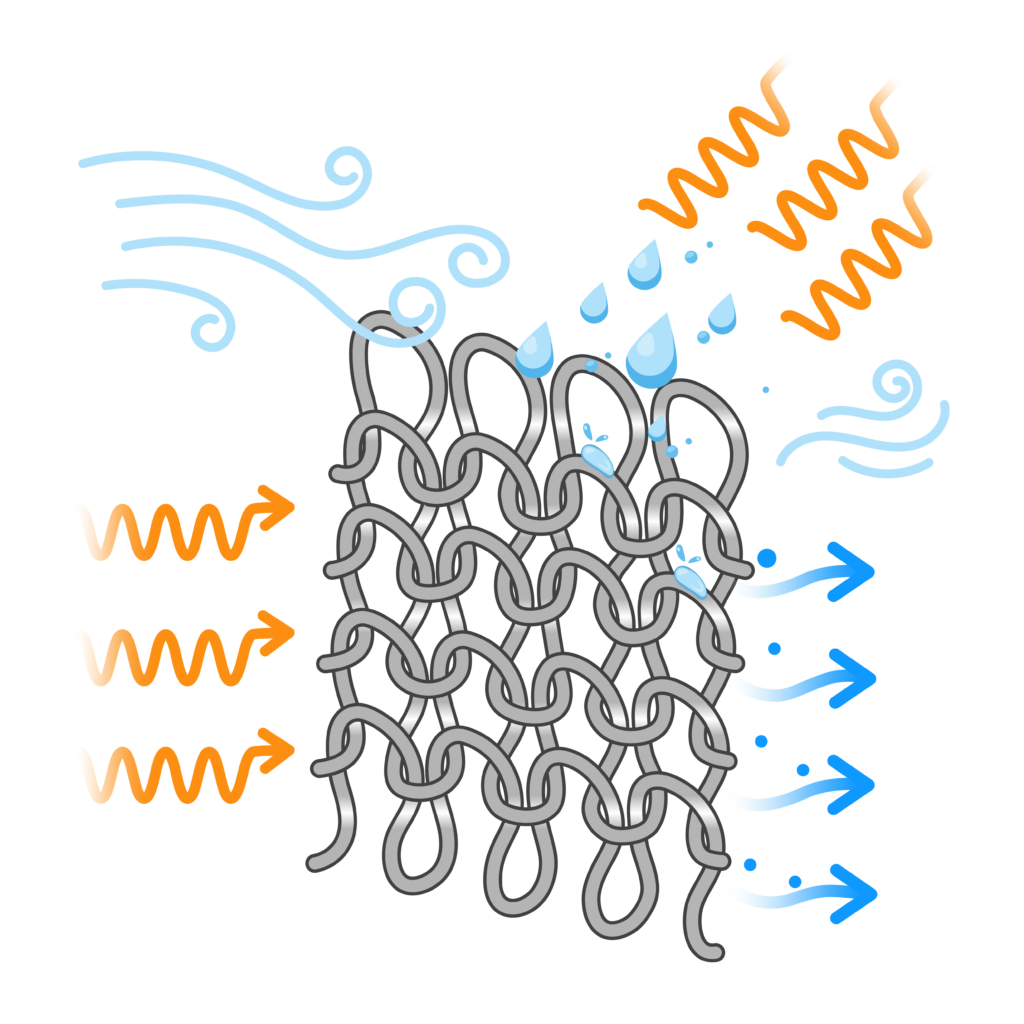
Durability in Continuous Operation.
Metal knitted mesh absorbs vibration, wind, and alternating loads without permanent deformation or fatigue. In combination with the corrosion resistance of stainless steel, this creates a material that remains stable over long periods, even under weathering.
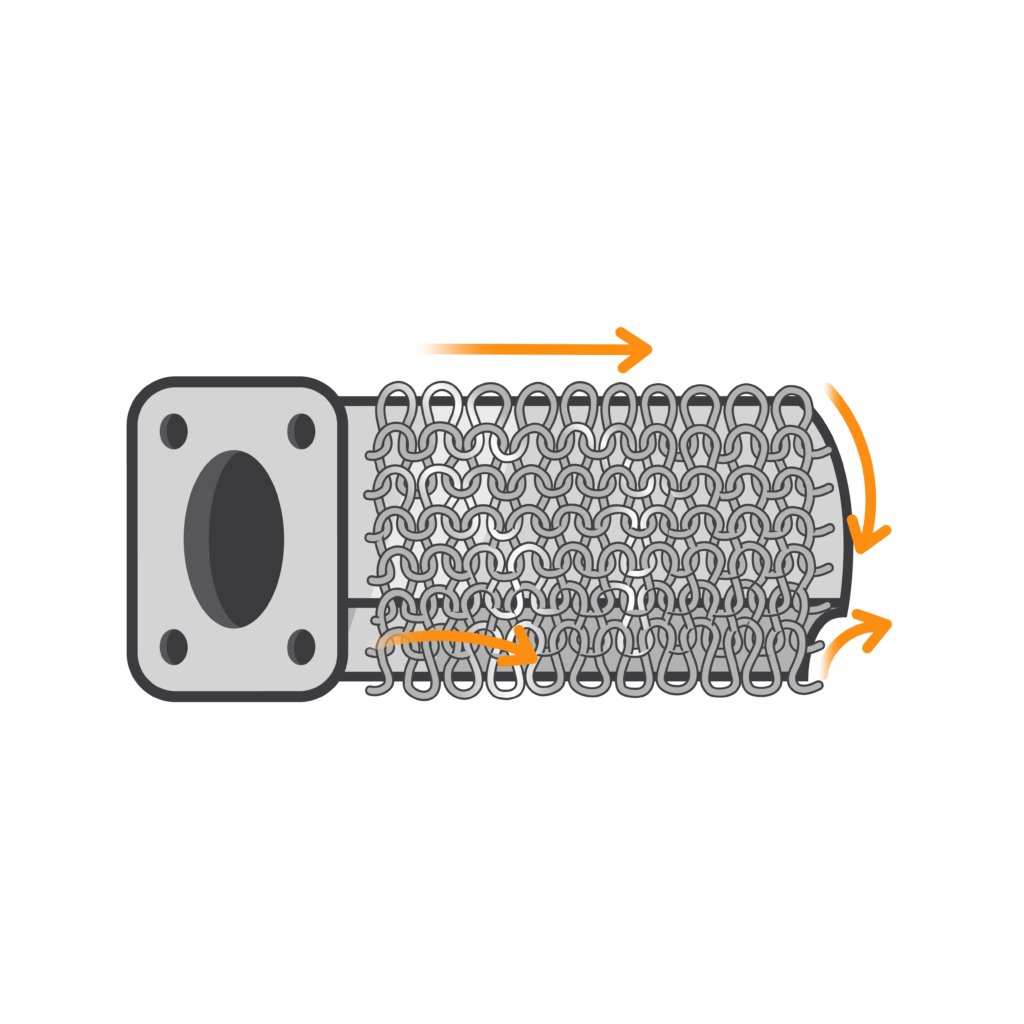
Formability Without Added Mass.
The knitted mesh can be applied to complex geometries and combined with other materials without adding significant weight. This allows functions to be integrated where rigid or heavy components reach their limits.
How these properties can be specifically utilized depends on the design – on a few adjustable parameters that we define together with you in the project.
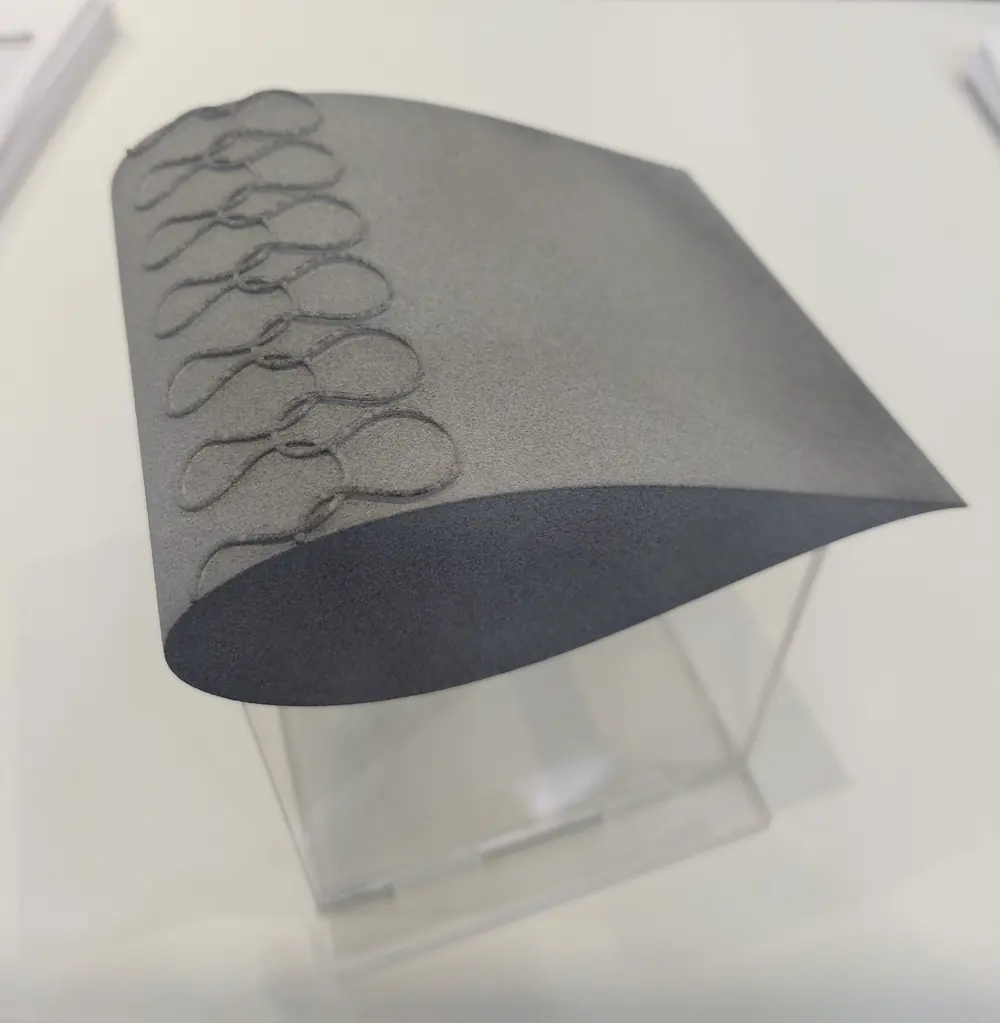
Adjustable Parameters for
Your Wind Power Component.
The function the structure performs results from a few parameters. We design them together with you for the application.
Material & Alloy.
Stainless steel or special alloys – the choice of material determines corrosion resistance, strength, and behavior under continuous load. For weather-exposed applications, it is the primary factor to clarify.
Structure & Density.
Mesh pattern, wire gauge, and packing density determine how stiff or flexible, how open or closed the structure will be – and thus its functional character.
Surface & Combination.
Whether smooth, structured, or combined with other materials: the surface design is based on the aerodynamic and structural requirements of the component.
Geometry & Integration.
Insert, surface, or structural component: form and integration depend on the existing design – the knitted mesh integrates rather than replaces it.
These adjustable parameters result in a component that precisely fits your application – not by chance, but through collaborative design.
Why eloona?
Because a reliable development partnership is no accident.
Developers, designers, and industrial partners come to us when a component must perform aerodynamically, mechanically, and in continuous operation simultaneously – and the path to that leads through the material. We develop custom functional structures, not catalog products: we contribute the material and constructive implementation, and the design is created collaboratively within the project.
Precise in material. Clear in structure. Reliable in project.
Frequently Asked Questions about Knitted Wire Mesh in Wind Power.
What role does knitted wire mesh play in wind power applications?
Knitted wire mesh is a customizable metallic functional material. In wind power, it serves as an insert, surface, or structural component in special aerodynamic developments. eloona provides the material and constructive implementation – the fluid dynamic design is developed jointly with project partners.
Does eloona guarantee an increase in efficiency or performance?
No. Efficiency and aerodynamic behavior depend on the overall system, not solely on the material. We do not make blanket efficiency promises, but rather deliver robust technical structures and work out effects on a project-specific and verifiable basis.
How does the knitted mesh behave under weathering and continuous load?
Metal knitted mesh made of stainless steel is corrosion and weather-resistant and absorbs vibration and alternating loads in a damping manner. This makes it suitable for long-term outdoor use on wind turbines. Special alloys are possible for particular environments.
Is knitted wire mesh suitable for protecting highly stressed surfaces?
Metallic structures can mechanically protect component surfaces that are subject to abrasive or weather-related stress. Whether and how this can be implemented for a specific application – for example, on highly exposed components – we clarify together on a case-by-case basis.
Does a knitted mesh component significantly increase weight?
Generally not. The open structure provides functionality with low added mass and can be combined with other materials – an advantage wherever rigid or heavy components reach their limits.
How does a development project with eloona proceed?
The process begins with the task, not the finished component. Together with you and, if applicable, other industrial partners, we clarify requirements, material, and structure, develop samples, and iteratively work towards a robust solution. We are responsible for the material and constructive implementation.
What materials do you use for manufacturing?
Stainless steel in various alloys is common; special materials are also used for specific requirements. The choice depends on load, environment, and required service life.
How do I find out if knitted wire mesh is suitable for my wind power application?
The best way is to describe the task to us: the component, its stress, the environment, and the goal. Based on this, we will jointly assess if and how knitted wire mesh can be effectively used. A brief inquiry via the contact form is sufficient to get started.
Are you looking for new technical approaches for wind power and aerodynamics? Talk to us.
Whether you are tackling a special aerodynamic development from scratch or seeking a robust, weather-resistant material for an existing component: We contribute knitted wire mesh and constructive experience and develop the structure together with you – from the first sketch to the tested component.
For a quick start, the following information helps us:
- the component and its function in the system
- the stresses (wind, weather, vibration, abrasion)
- the environmental and operating conditions
- geometry, installation space, and integration
- the goal of the development
So that flow, material, and construction come together – throughout the entire service life.