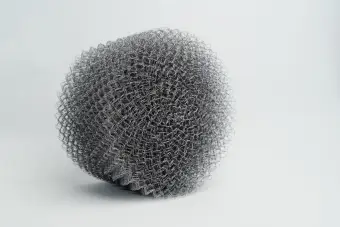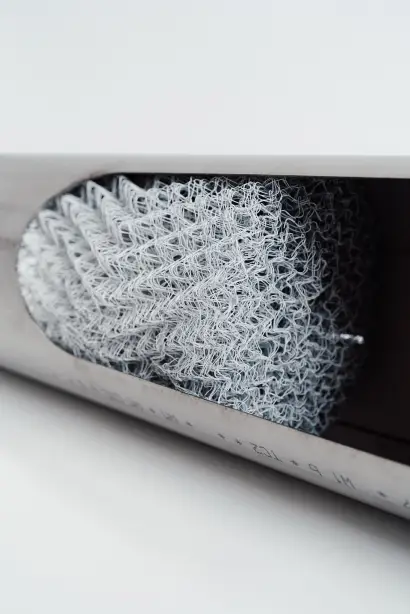
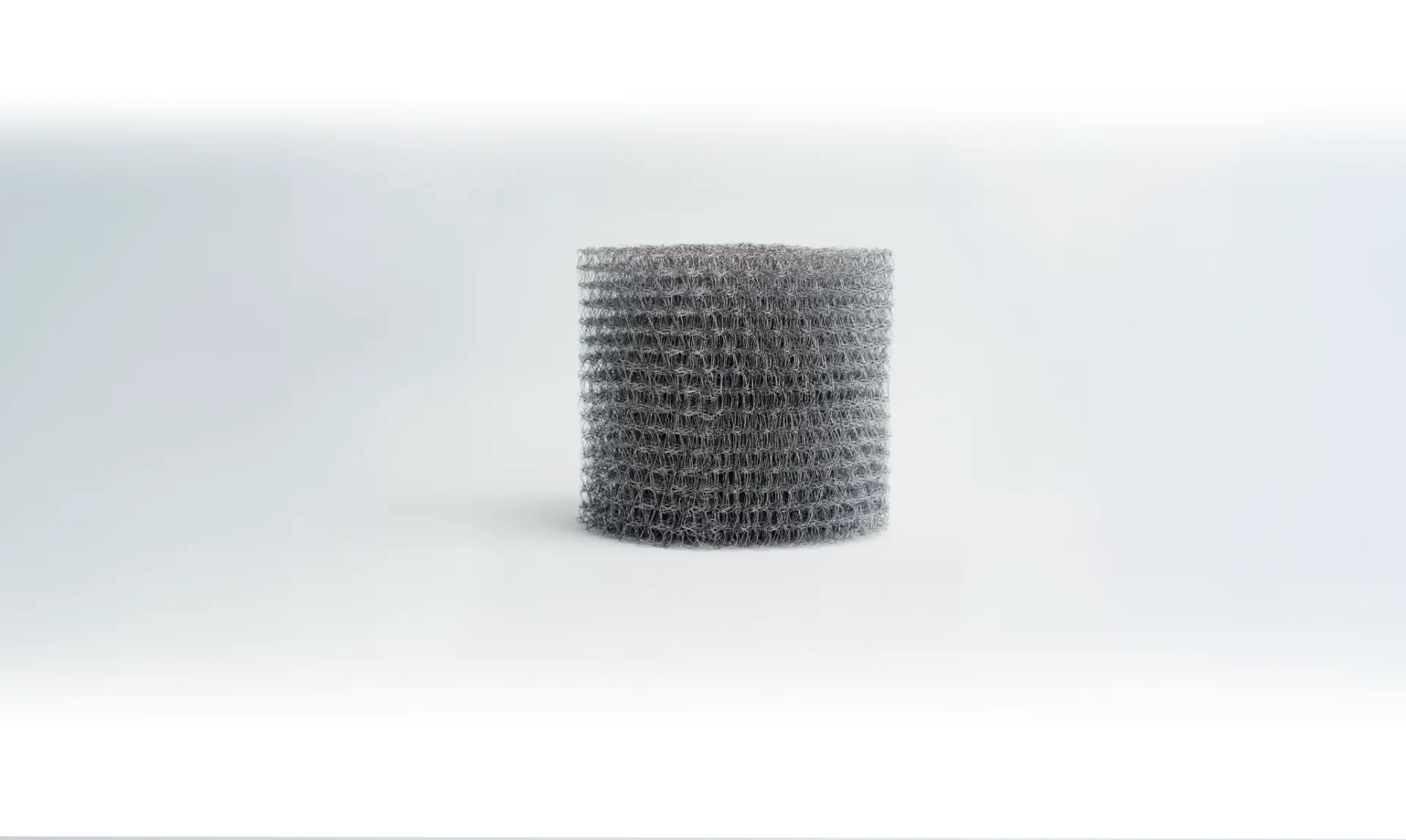
Wound filters.
When droplets become a risk.
Invisible in use. Indispensable in effect.
When droplets in the gas stream become a risk, you don’t need an off-the-shelf component.
You need a filter element that understands the flow, stabilizes processes, and simply works at the decisive moment.
Wound filters are used for the reliable separation of liquid droplets from gaseous media. They relieve processes, protect downstream components, and ensure clean, controlled operating conditions – with high separation efficiency and low pressure drop.
What wound filters achieve.
Our wound filters offer:
separation efficiency
at low
pressure drop
droplet separation
even under demanding
process conditions
downstream
components and
plant engineering
through precisely
configured
knitted mesh structures
operating conditions and
higher process efficiency
design for geometry,
medium, and
installation situation
long-term
industrial use
even under
varying
operating conditions

downstream
components and
plant engineering
droplet separation
even under
demanding
process conditions
separation efficiency
at low
pressure drop
through precisely
configured
knitted mesh structures
for long-term
industrial use
even under
varying
operating conditions
design for geometry,
medium, and
installation situation
operating conditions
and higher
process efficiency
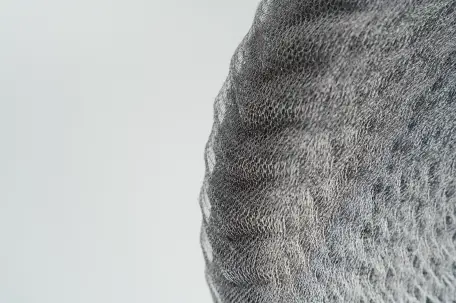
- high separation efficiency at low pressure drop
- reliable droplet separation even under demanding process conditions
- protection for downstream components and plant engineering
- stable operating conditions and higher process efficiency
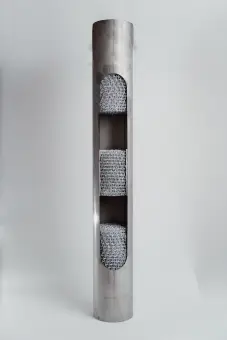
- customized design for geometry, medium, and installation situation
- robust quality for long-term industrial use
This combination makes knitted wire mesh an indispensable material for droplet separation in industry.
The model
from nature.
Nature demonstrates this principle in its most perfect form: a fine spider web in the morning mist allows air to pass through unhindered — yet the moisture clings, collects, grows into droplets, and finally drains away.
This is exactly how wound filters work.
They do not intervene in the process with brute force. They act intelligently through structure, surface, and flow behavior. The gas flows on. The droplets are reliably captured, separated, and discharged.
This type of effect is typical of good technology:
not loud, not intrusive, but precise, reliable, and ultimately indispensable.
How wound filters
work.
Wound filters utilize the higher inertia of liquid droplets compared to the gaseous medium. While the gas follows its flow direction, droplets cannot follow changes in direction to the same extent.
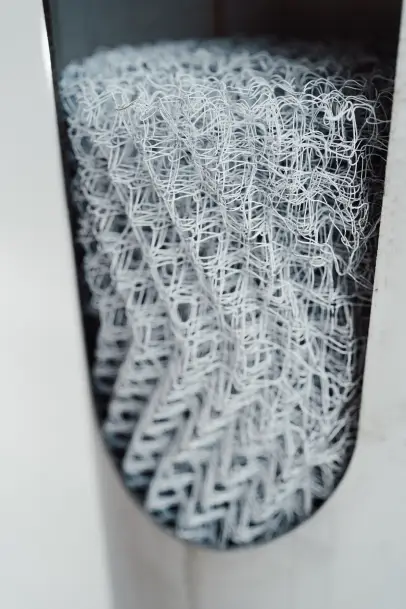
They hit the structure of the knitted wire mesh, adhere there, combine to form larger droplets, and are then discharged in a controlled manner – either over the edge of the vessel or by dripping into the designated collecting area.
This creates a separation principle that is simultaneously efficient, aerodynamically favorable, and process-reliable. As compact filter pads, wound filters can be flexibly integrated into various systems.
Custom work instead of standard thinking.
Every plant is different.
Every flow behaves differently.
Every medium has its own requirements.
That is why we manufacture wound filters not as a compromise, but as a solution. Dimensionally accurate, application-specific, and technically sophisticated.
Dimensions and geometries.
- virtually all sizes and designs
- round, segmented, or plant-specific geometries
- with or without grids or covers
- shred-free design
Material.
- acid-resistant, heat-resistant, and high-alloy stainless steels
- Inconel®, Monel®, Duplex
- Hastelloy®, titanium
- aluminium, galvanised steel
- various material combinations
- other special materials on request
Where others think in standards, we start with the task. Because at eloona, what is technically sensible is feasible – not what is convenient.
We don’t believe in “impossible.”
Wire diameter.
- from 40 µm to 0.7 mm
Typical areas of application.
Wound filters are used wherever liquid droplets must be removed from gaseous media.
Typical examples:
- evaporators
- gas scrubbers
- air-conditioning and exhaust air systems
- steam boilers
- seawater desalination plants
- plants for oil and emulsion mist separation
- systems for the protection of fans and steam turbines
- process engineering apparatus in plant engineering, chemistry, and the petrochemical industry
The decisive factor is not only that droplets are separated, but how. Controlled via the knitted mesh, with the lowest possible pressure drop, high operational reliability, long service life, and a design that fits the process.
Our expertise in the manufacturing of wound filters.
Technical performance does not only come from material – but from experience, vertical integration, and a sure sense for what really counts in operation.
We also realize complex designs with high dimensional accuracy and process special materials as well as material combinations routinely and precisely. Through proven manufacturing processes, our own machine systems, and resilient supplier connections, we can react quickly without compromising on quality.
In doing so, we rely predominantly on high-quality raw materials from Germany and the EU. This creates reliability in processing, supports short distances, and strengthens resource-conscious value creation.
In the end, it’s not about delivering a wound filter. It’s about creating a solution that proves itself in the process.
Why eloona?
Because good droplet separation is no coincidence.
It is the result of technical understanding, clean manufacturing, and genuine cooperation. We listen carefully, immerse ourselves in applications, and develop wound filters that are not only right on paper but also convince in real operation. Precise in detail. Clear in function. Strong in effect.
This is how solutions are created that do not push themselves into the foreground – but make the difference exactly where it matters.
Data sheets for wound filters.
For technical evaluation and planning, we provide you with the most important documents for our wound filters in a clear format. This allows you to quickly find the specifications you need for design and inquiry.
Made in Germany
We predominantly use input materials from the EU.
The processing of high-quality wires enables durable and precise products.
Through short transport routes, efficient manufacturing, and minimal scrap rates, we also contribute to sustainable production.
Frequently asked questions about wound filters.
What is a wound filter?
A wound filter is a filter element for the separation of liquid droplets from gaseous media. It is constructed from knitted wire mesh, which allows gas or air flows to pass through while droplets are reliably removed from the gas stream and discharged in a controlled manner.
How does a wound filter work as a droplet separator?
Wound filters utilize the higher inertia of liquid droplets compared to the gaseous medium. While the gas follows the flow direction, the droplets hit the knitted wire mesh, adhere, combine to form larger droplets, and drain away in a controlled manner. This results in efficient and simultaneously aerodynamically favorable separation.
What advantages do wound filters offer?
Wound filters combine high separation efficiency with low pressure drop. They work reliably even under varying operating conditions, protect downstream components, and can be precisely designed for geometry, medium, and installation situation.
For which applications are wound filters suitable?
Typical fields of application are evaporators, gas scrubbers, air-conditioning and exhaust air systems, steam boilers, seawater desalination plants, and plants for oil and emulsion mist separation. They are also used to protect fans and steam turbines as well as in process engineering apparatus in chemistry and the petrochemical industry.
Are wound filters available in special designs?
Yes. We manufacture wound filters application-specifically — in almost all sizes, geometries, and material combinations, tailored to your technical requirements.
Which materials are possible?
We process acid- and heat-resistant as well as high-alloy stainless steels, plus special materials such as Inconel®, Monel®, Hastelloy®, Duplex, and titanium – as well as aluminium and galvanised steel. Other materials are possible on request. The selection depends on the medium, temperature, and chemical load.
How do wound filters affect pressure drop and service life?
By means of wire diameter, packing density, and knitted mesh structure, we specifically tailor the ratio of separation efficiency, pressure drop, and service life to your plant. This results in wound filters that work efficiently and simultaneously remain in operation for a long time.
How do I find the right design?
The correct design depends, among other things, on the medium, temperature, pressure conditions, droplet load, flow velocity, and installation situation. We support you in selecting the technically appropriate solution.
You have an application – we have the right structure
Whether filtration, separation, or special application – together we develop the knitted wire mesh that fits your requirements.
Describe your application to us; the rest will follow in conversation.