
Explosion protection.
When material and structure
determine safety.
In explosion protection, material, structure, and flow behavior determine function and safety. Knitted wire meshes and special metallic structures are specifically tailored to critical operating conditions – as functional components in flame arresters, energy distribution, and pressure relief systems.
We supply the knitted wire mesh component. Certification of the overall system is carried out by the plant engineer or system integrator in accordance with applicable standards.
What knitted wire mesh achieves in explosion protection.
Knitted wire meshes and special metallic structures are used in mechanical explosion protection where material, geometry, and flow behavior must be specifically designed for safety-relevant tasks. Depending on the application, they can perform different functions:
- Flame arrester – the knitted wire mesh structure can cool passing flames and delay or prevent their spread through narrow metallic gaps.
- Energy distribution – the three-dimensional structure can distribute pressure and explosion energy over a large surface area, contributing to controlled energy dissipation.
- Spark retention – sparks can be intercepted within the metallic structure before they reach other areas of the plant.
- Pressure relief – as a functional component in pressure relief systems, knitted wire meshes support controlled energy dissipation.
Applications
- Food industry
- Wood and metal processing
- Apparatus and plant engineering
- Chemical industry
- Extraction and exhaust air systems
- Filtration and separation technology
- Special components with safety-relevant functions
We supply these components as functional parts – both to plant engineers and to manufacturers of specialized safety systems. Through wire diameter, combinations, materials, densities, and component geometries, we tailor the component exactly to the planned application and the safety requirements of the overall system.
Suitable products for your explosion protection application.
Depending on the application and requirement, different knitted wire mesh structures are used – from the base material to the project-specifically developed functional component:
Knitted wire meshes
The material core: knitted metal structure made of stainless steel and special metals, formable into flame barrier elements, spark arresters, and inserts for pressure relief systems. The basis of every customized explosion protection component.
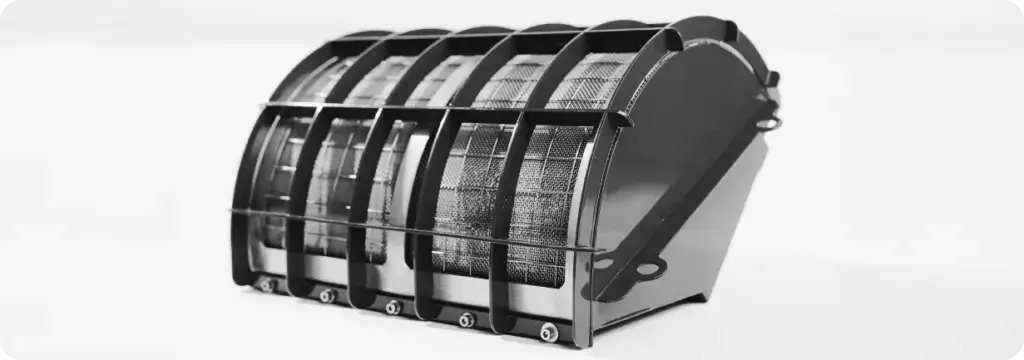
Explosion protection cassette
Ready-to-install structures for extraction, exhaust air, and filtration systems in hazardous areas
Special applications
Project-specific developments for flame arresters, pressure relief, and spark retention systems
How knitted wire mesh works in explosion protection.
The effect of knitted wire mesh components in explosion protection is based on three physical effects, which are combined differently depending on the application:
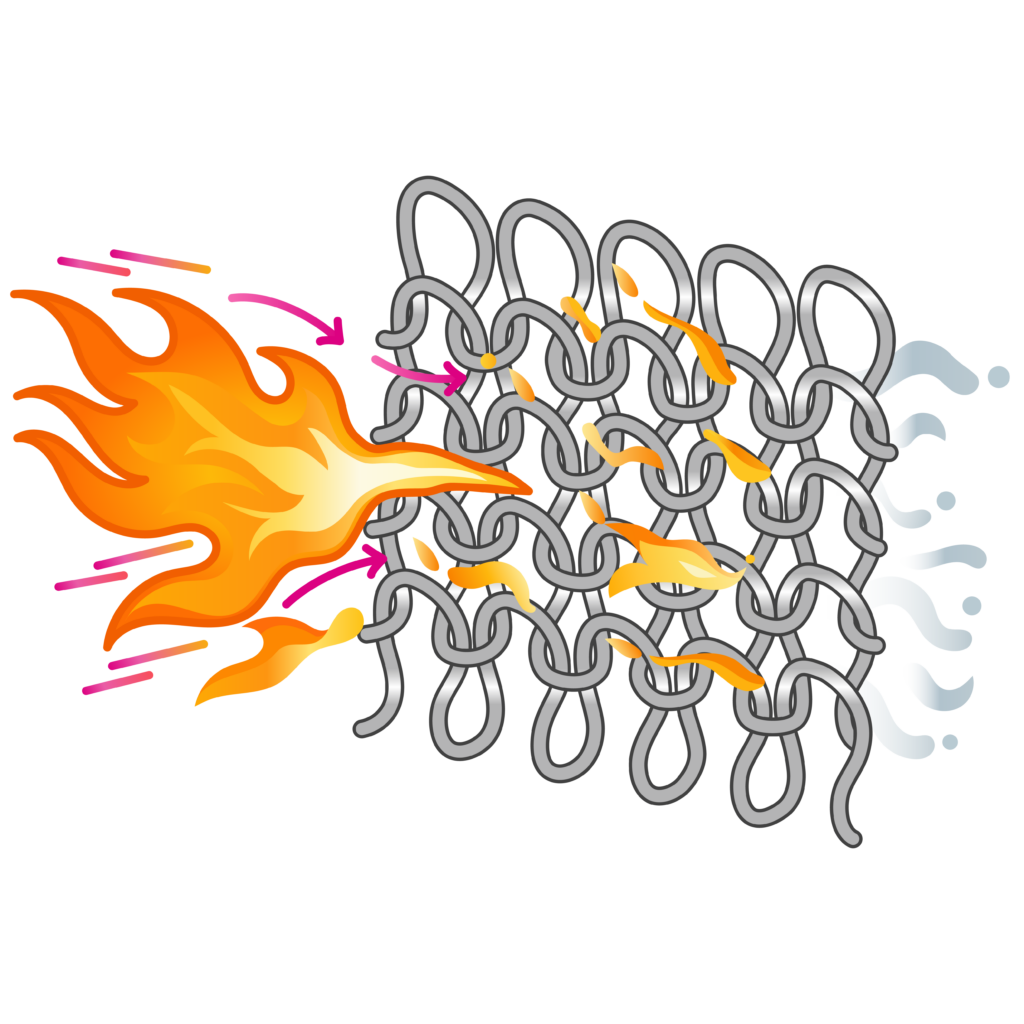
Flame quenching through narrow gaps.
When a flame front passes through the quenching gaps of a knitted wire mesh structure, the hot gases transfer a significant portion of their heat to the cooler metal surface. If the gap widths are below the medium’s maximum experimental safe gap, the flame cannot continue to burn.
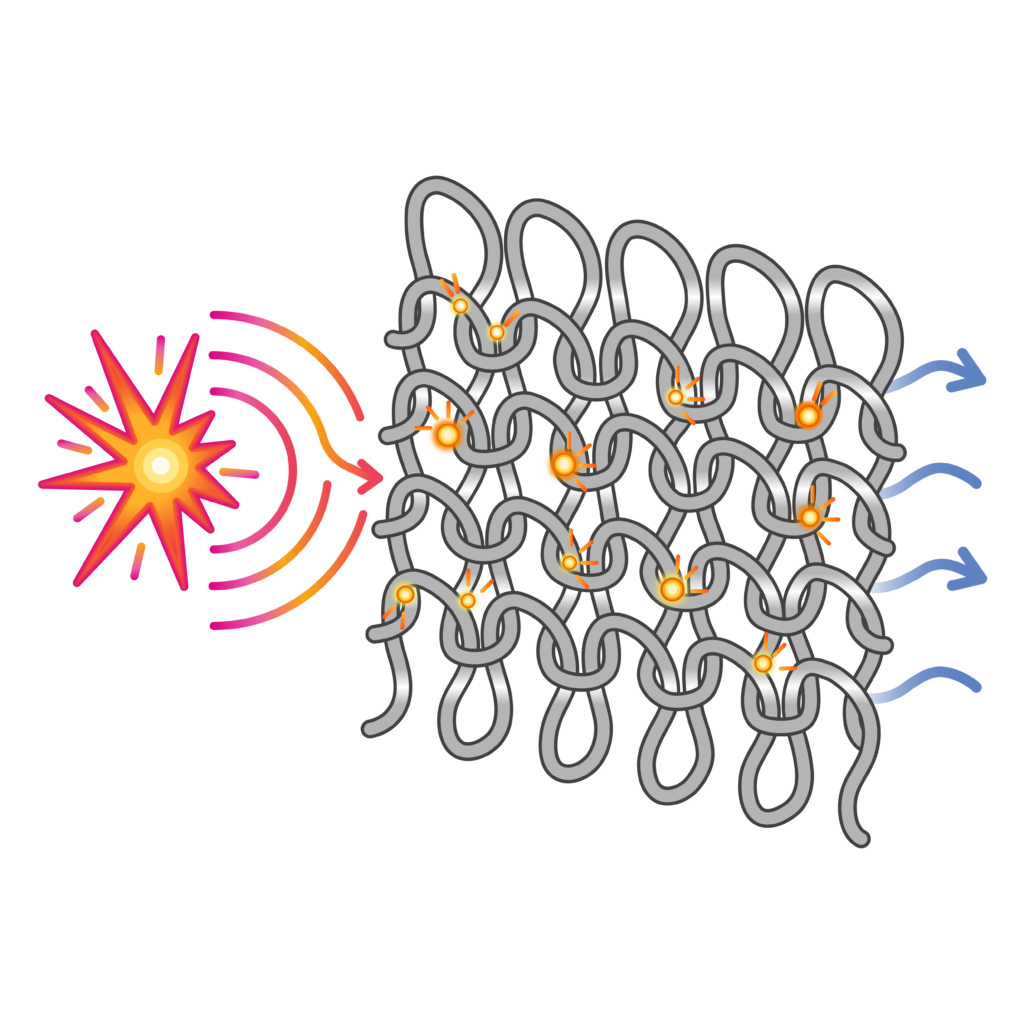
Energy reduction through large internal surface area.
Knitted wire meshes possess a very large surface area with comparatively low material usage. Pressure and explosion energy can be distributed across it, which can reduce pressure peaks and support controlled energy dissipation in pressure relief systems.
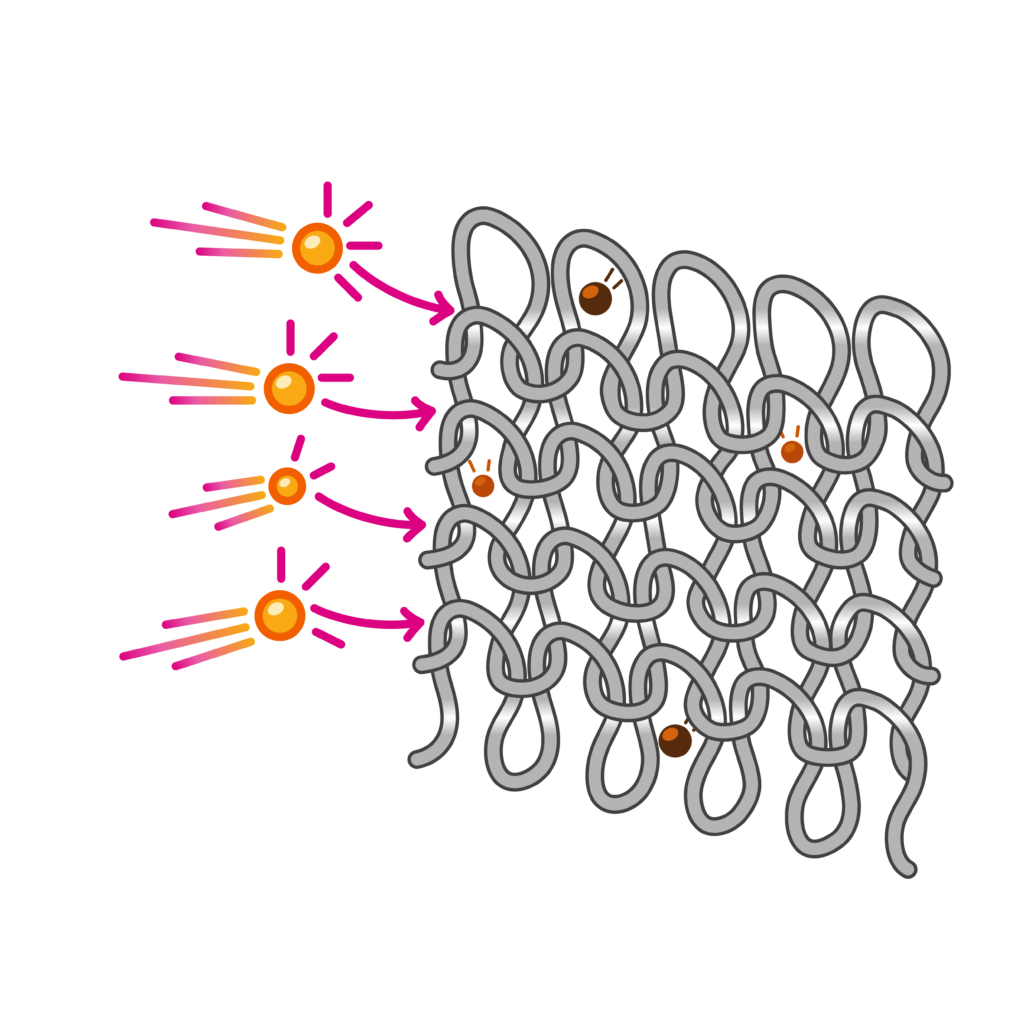
Mechanical spark retention.
Glowing particles and sparks hit the multi-layer wire structure, are mechanically retained, and cool down in the process. This limits the transfer of ignition sources to adjacent plant areas.
Which effect dominates depends on the specific application – this is exactly where our design process begins: material, wire diameter, gap geometry, and packing density are matched to the required function.
Key parameters for
the explosion protection function.
The function of a knitted wire mesh component in explosion protection does not depend on a single feature, but on the interaction of several parameters. We design the component for your application using these four key parameters:
Gap geometry.
Determines how effectively flames can be cooled and sparks can be retained. Narrower gaps increase the quenching effect but influence pressure drop and flow behavior.
Wire diameter.
Influences heat dissipation, mechanical stability, and thermal resistance. Finer wires increase the surface area for heat exchange; thicker wires increase service life and robustness against pressure and temperature peaks.
Packing density.
Determines the number of effective metallic layers and thus the degree of energy reduction and spark retention. Higher density improves the safety function but influences pressure drop and installation space.
Material choice.
Stainless steels, special metals (Inconel®, Monel®, Hastelloy®) – the choice of material depends on the medium, temperature, chemical load, and the required resistance to pressure and temperature peaks.
From these four key parameters, a component is created that fits the requirements of your safety system exactly – not by chance, but by design.
Why eloona? Because reliable explosion protection is no coincidence.
It is the result of technical understanding, precise manufacturing, and close cooperation with explosion protection experts, plant engineers, and system manufacturers. We listen carefully, immerse ourselves in safety-relevant applications, and develop components that reliably fulfill their function – within the system boundaries you define. Precise in detail. Clear in function. Strong in effect.
This is how components are created that do not push themselves to the fore – but make the difference exactly where it matters.
Frequently asked questions about knitted wire mesh in explosion protection.
What functions can knitted wire mesh perform in explosion protection?
Knitted wire meshes are used as functional components in four main areas: flame arresters, energy distribution and pressure relief, and spark retention. The specific function results from the material, geometry, and density of the structure – it is matched to the requirements of the overall system.
Are eloona's knitted wire mesh components certified according to ATEX or IEC 60079?
We supply knitted wire mesh components as functional parts. Certification of the overall system – for example according to ATEX, IEC 60079, or other applicable standards – is carried out by the plant engineer or system integrator. We support you with documented material data, clear material certificates, and manufacturing according to DIN EN ISO 9001:2015.
How does a flame arrester with knitted wire mesh work?
A knitted wire mesh structure in a flame arrester works through two effects: the hot gases of a passing flame transfer a significant portion of their heat to the cooler metal surface, and narrow gap geometries can – depending on the medium and the chosen gap width – delay or prevent flame propagation. The design is application-specific.
Which materials are suitable for explosion protection applications?
Stainless steels such as 1.4301 and 1.4404 are the most common choice. For higher temperatures, aggressive media, or specific chemical requirements, special metals such as Inconel®, Monel®, Hastelloy®, titanium, or duplex materials are used. The choice of material always follows the specific application.
Can knitted wire meshes be used in the food industry?
Yes. For applications with hygiene or purity requirements, we process appropriate stainless steels and can address specific surface treatments. The specific suitability for regulated industries is clarified together in advance.
Can knitted wire mesh components be cleaned during use?
Oil- and grease-free stainless steel meshes can be particularly useful in demanding explosion protection applications – especially when the highest requirements are placed on cleanliness, process safety, or material purity. Whether a grease- and oil-free mesh is required always depends on the specific application. Our experience has shown that in premium applications, sensitive process areas, or customer-specific safety requirements, a corresponding design can make an important contribution to the reliable function of the component. We work with you to determine the requirements of your application and whether an oil- and grease-free stainless steel mesh is technically sensible or necessary.
When are oil- and grease-free stainless steel meshes useful in explosion protection?
In which industries are knitted wire meshes used in explosion protection?
How do I find the right knitted wire mesh component for my explosion protection application?
Describe your application to us: the overall system, the medium, the temperature and pressure conditions, the normative requirements, and the required functions. On this basis, we will work with you to develop the right component – from the initial design to the ready-to-use solution.
Let’s talk about
your explosion protection application.
Are you planning a safety system – or are you looking for a knitted wire mesh component for an existing application? Describe your requirements to us: the overall system, the medium, the required function, and the normative specifications. On this basis, we will work with you to develop the appropriate functional component.