
Coatings.
When base material
and geometry
alone are not enough.
Functional and design-oriented surfaces to expand technical properties – from protection and durability to special application functions or high-quality product design.
eloona develops coated knitted mesh structures together with you and selected finishing partners – we contribute the material and structure, and the suitable coating is created within the project.
What coatings can achieve for knitted wire mesh.
Coatings can specifically enhance technical knitted mesh and metallic structures – functionally, visually, or a combination of both. Depending on the application, surfaces can be designed to be more durable, media-resistant, non-stick, or better adapted to specific operating conditions.
At the same time, coatings can also be used for purely design-related reasons. Especially for visible components, high-quality product solutions, or design-oriented applications, knitted wire mesh can be specifically showcased through suitable surface finishing. This transforms a technical structure into an elegant design element with special haptics, depth, and value.
eloona develops coated structures for tasks where the base material and geometry alone are insufficient – or where a special surface significantly enhances the product design. The focus is on function, adhesion, durability, component geometry, process capability, and aesthetic impact.
Applications
- Corrosion protection
- Media resistance
- Non-stick properties
- Functional surfaces
- Design coatings for visible components
- Special solutions for specific process conditions
- Surface finishing for high-quality product design
Suitable products for coated structures.
It starts with the knitted mesh, and ends with the finished surface. Both are developed by eloona from a single source – the coating in collaboration with specialized partners.
Support grid & knitted mesh components
The material core: knitted metal structure made of stainless steel or special alloys, formable into components, visible elements, and functional structures. The basis for every coated solution.Coated design separation cassettes
Functional and design-oriented surfaces are created as a development service – tailored to application, adhesion, durability, and design, in collaboration with selected finishing partners.
What defines the coated structure.
The effect results from the interplay of knitted mesh and surface – the structure provides form and function, while the coating adds properties that the bare material does not possess. Three aspects are crucial here.
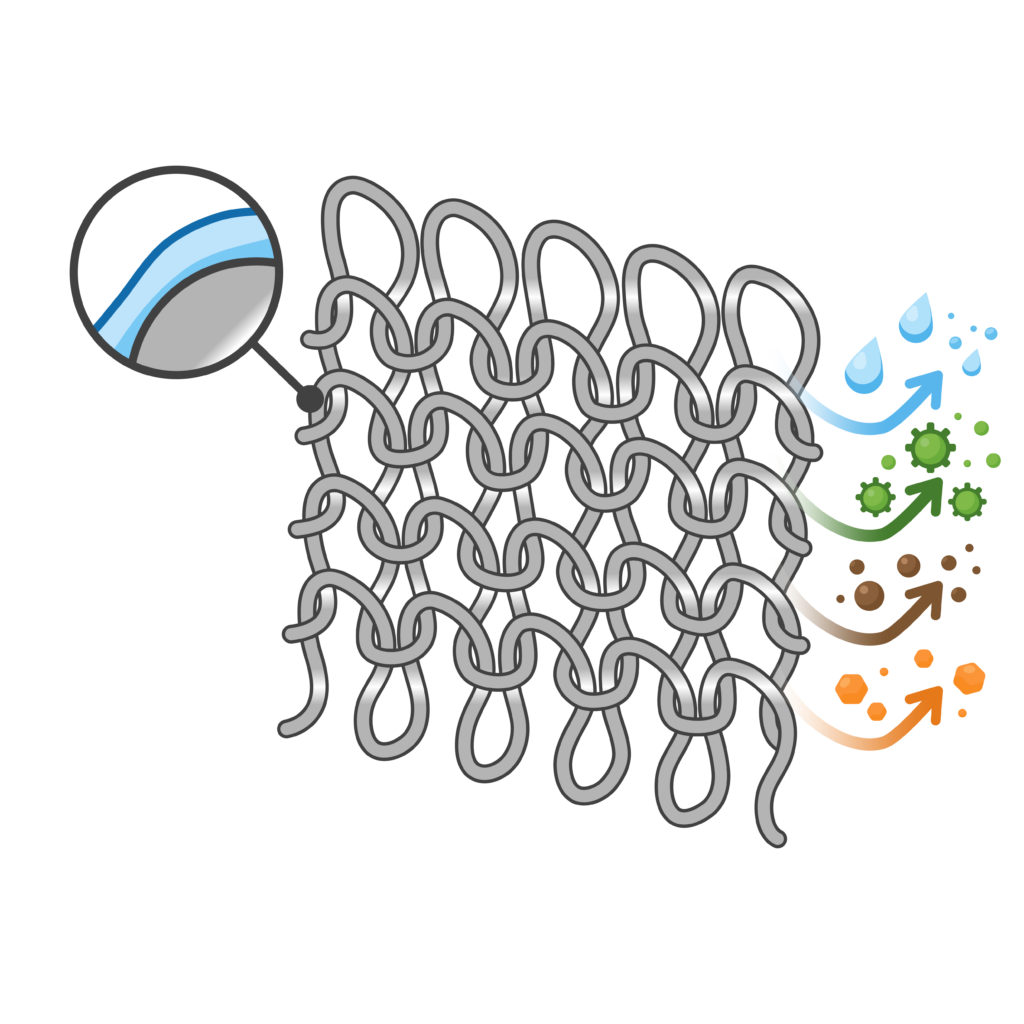
Function through the surface.
A coating can make the knitted mesh more durable, media-resistant, or non-stick – depending on the requirement. This allows properties such as corrosion protection or defined release behavior to be specifically added without altering the basic structure.
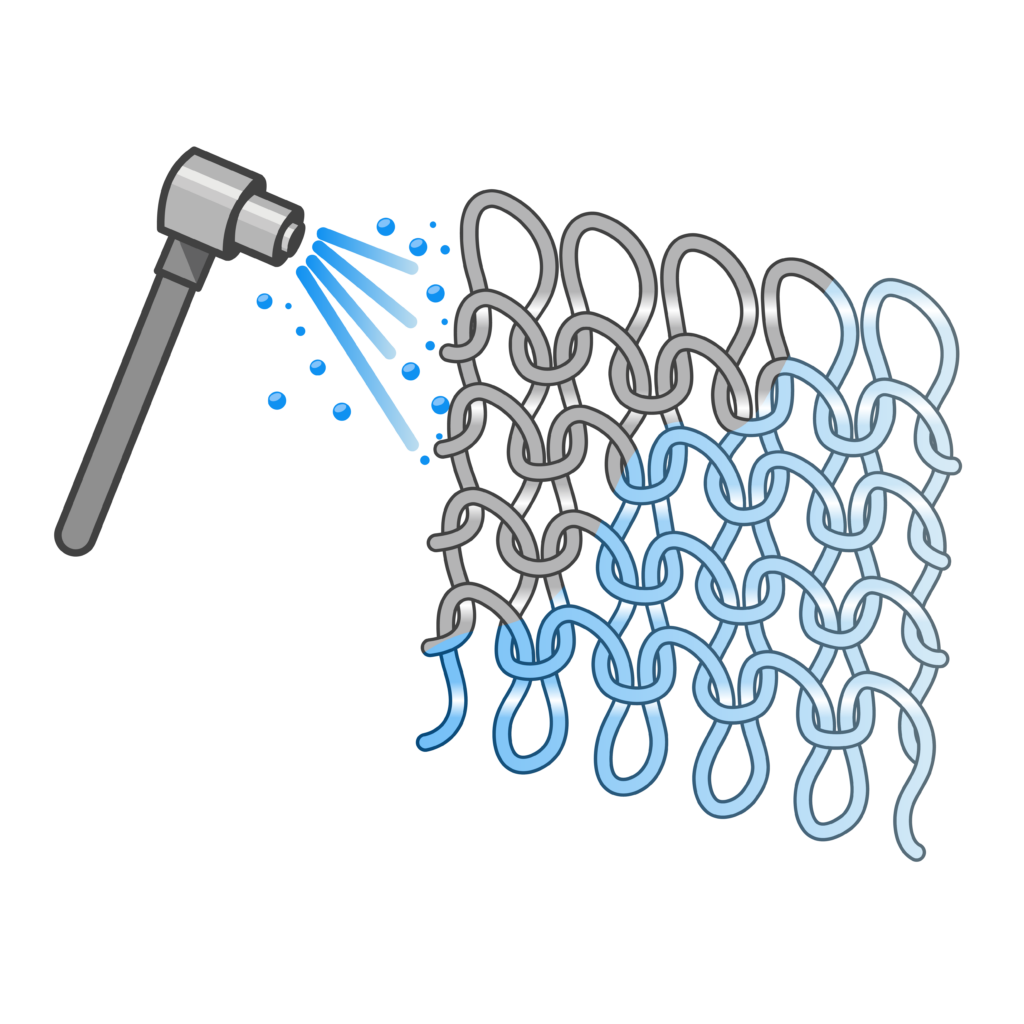
Adhesion to the knitted mesh geometry.
The crucial question is how well a coating adheres to the open, three-dimensional knitted mesh structure and reaches it uniformly. This is precisely where the development work lies: material, geometry, and coating process must match. We clarify this together with our finishing partners.
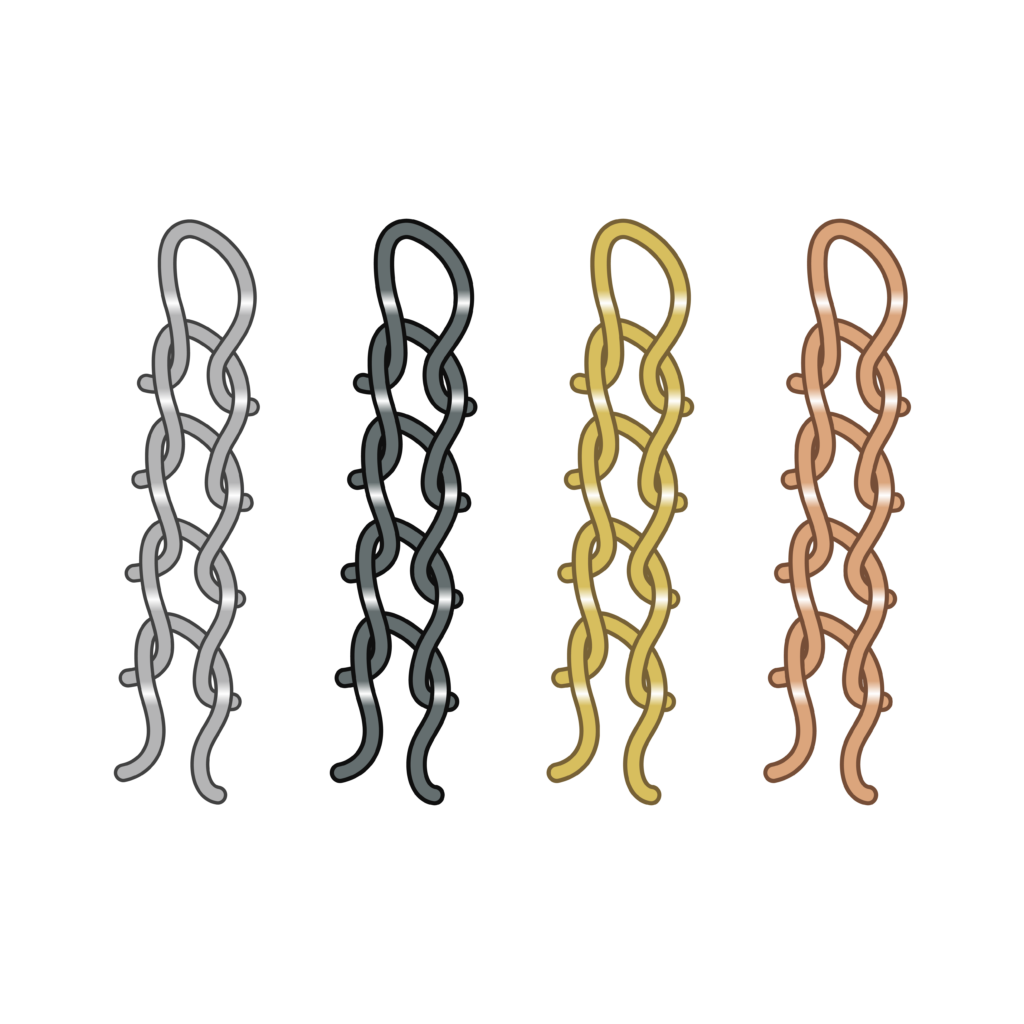
Aesthetics and value.
Beyond function, surface finishing changes the appearance: color, gloss, haptics, and depth transform a technical structure into a visible design element. This is often as important as the technical function for design-oriented and visible components.
Which coating is suitable for your application depends on several factors – which we evaluate together with you.
Key parameters for your coated structure.
Which coating makes sense on which knitted mesh results from the interplay of several factors. We weigh them together with you and our partners.
Function & requirement.
Corrosion protection, media resistance, non-stick, or design: what the surface should achieve determines the coating process and material. The requirement comes first.
Material & knitted mesh geometry.
The alloy, wire thickness, and mesh pattern of the knitted mesh influence how a coating adheres and reaches the structure. Material and geometry are considered from the outset.
Coating process.
Whether dipping, spraying, galvanic, or other processes – the choice depends on function, geometry, and process capability. We select the appropriate process together with our finishing partners.
Process capability & component.
Quantity, component size, and handling determine whether a coating can be implemented economically and reproducibly – a point that should be included early in development.
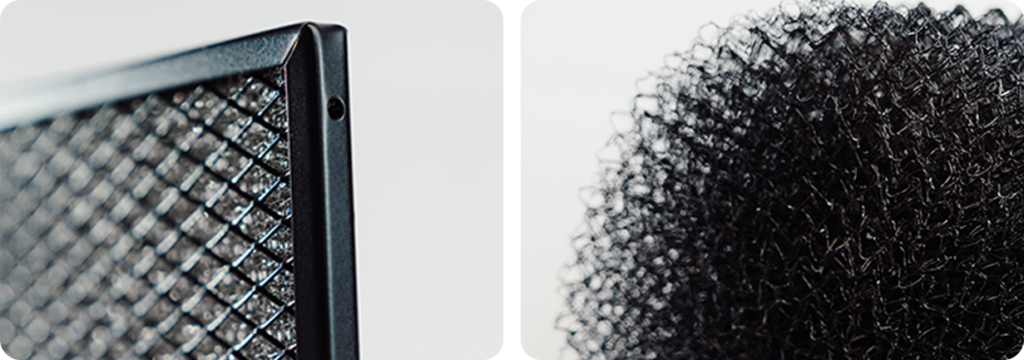
These key parameters result in a coated structure that precisely fits your application – not by chance, but through joint design.
Why eloona?
Because a good coated structure is no accident.
Developers, designers, and design managers come to us when a surface needs to function and impress simultaneously – and the base material alone is not enough. We develop custom-made coated knitted mesh structures, not off-the-shelf products: we provide the material and structure, and the suitable finishing is created together with our partners.
Precise in function. Clear in adhesion. Elegant in effect.
Frequently asked questions about coated knitted wire mesh.
What are the benefits of coating knitted wire mesh?
A coating expands the properties of the knitted mesh – functionally, aesthetically, or both. It can protect against corrosion, make it media-resistant or non-stick, or visually enhance the surface. eloona develops the coated structure; the coating itself is realized in collaboration with specialized finishing partners.
Does eloona do the coating itself?
No. Our core business is knitted wire mesh and the development of suitable structures. The actual coating is handled by selected finishing partners – we contribute material, geometry, and application knowledge, and coordinate the process together. This results in a coated structure from a continuous development process.
What functional coatings are possible?
Depending on the requirement, coatings for corrosion protection, media resistance, non-stick properties, or other functional surfaces may be considered. Which one is specifically suitable depends on the material, geometry, and operating conditions – we clarify this during the project.
Can knitted wire mesh also be coated for aesthetic reasons?
Yes. Especially for visible components, surface finishing transforms a technical structure into a high-quality design element – with its own color, haptics, and depth. Function and design can also be combined.
Does a coating adhere to the open knitted mesh structure?
This is the central development question. How well a coating adheres and uniformly reaches the three-dimensional structure depends on the knitted mesh geometry, material, and process. We design precisely this interplay together with our partners – and test it for your application.
On which knitted meshes are coatings possible?
The basis is usually stainless steel, and for special requirements, special alloys. The choice of material is coordinated with the planned coating from the outset, because material and surface must match.
Is a coated structure also feasible for series production?
That depends on the component, quantity, and process. We consider process capability and reproducibility early on – so that a solution that convinces in the prototype also remains economically manufacturable in series production.
How do I find the right coated structure for my application?
The best way is to describe the task to us: desired function or appearance, operating conditions, component, and quantity. Based on this, we will develop the suitable solution together with you and our finishing partners. A brief inquiry via the contact form is sufficient to get started.
Do you need a functional or aesthetic surface? Talk to us.
Whether you need a technical surface with corrosion protection, non-stick properties, or media resistance, or a visible component that also impresses aesthetically: We develop the coated structure together with you and our finishing partners – from the requirement to the tested component.
For a quick start, the following information helps us:
- desired function (corrosion protection, non-stick, media resistance, etc.) or appearance
- operating conditions and stress
- material and component geometry
- quantity and series target
- special design or haptic requirements
So that the surface performs what base material and geometry alone cannot.