
Knitted wire mesh.
When wire becomes a
functional structure.
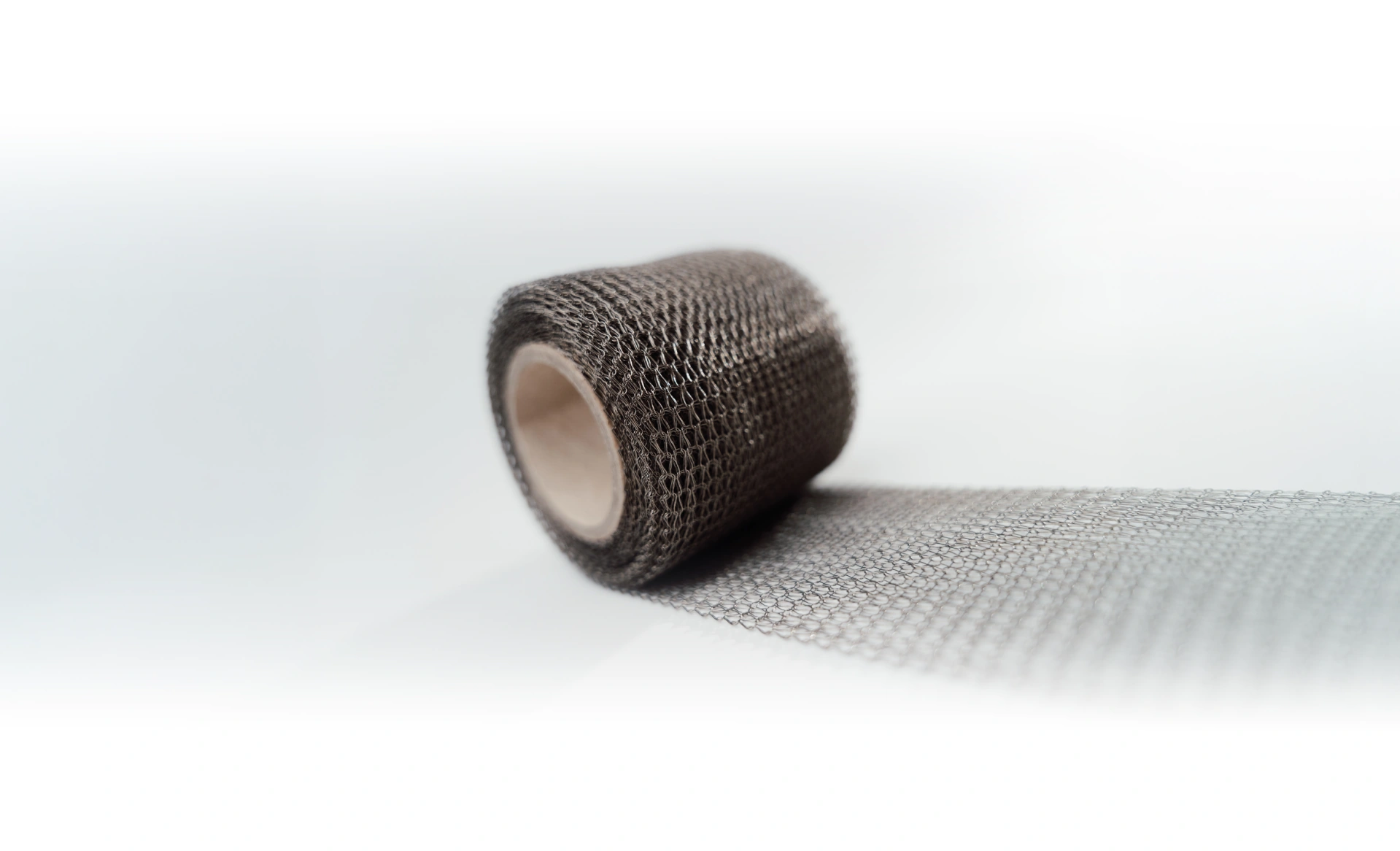
It is a highly functional structure developed to control flows, separate liquids, absorb energy, or provide mechanical protection.
What seems simple at first glance is actually the result of precise manufacturing and years of development work.
At eloona, knitted wire meshes are created from over 40 different materials – since 2009 – in Pleinfeld, Made in Germany.
You are currently viewing a placeholder content from YouTube. To access the actual content, click the button below. Please note that doing so will share data with third-party providers.
More InformationHow knitted wire mesh works.
Stitch by stitch, a structure with extraordinary properties is created
surface area
functional versatility
absorption capacity
flow rate
stability
Oberfläche
Absorptionsfähigkeit
Durchströmung
Stabilität
Funktionsvielfalt
- large surface area
- versatile absorption capacity
- high flow rate
- flexible stability
- excellent functional versatility
This combination makes knitted wire mesh applicable where standardized materials reach their limits – from filtration and vibration damping to explosion protection technology.
What is
knitted wire mesh?
Consider a leaf held up to the light. A finely branched network of veins runs through the leaf – countless delicate structures, interconnected, yet light, stable, and resilient.
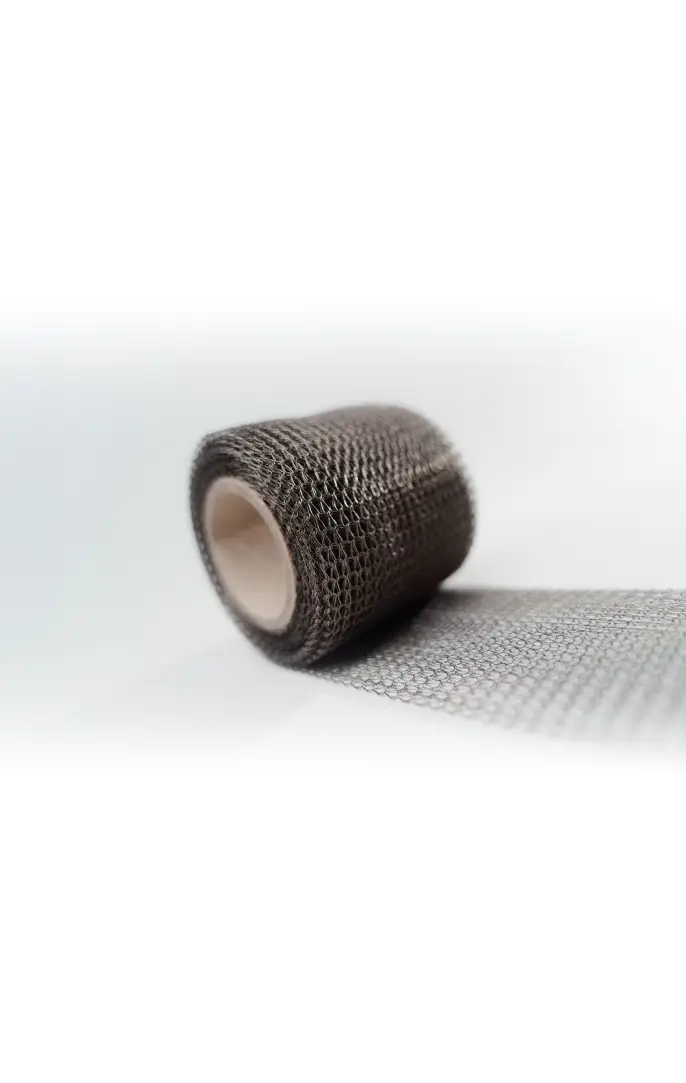
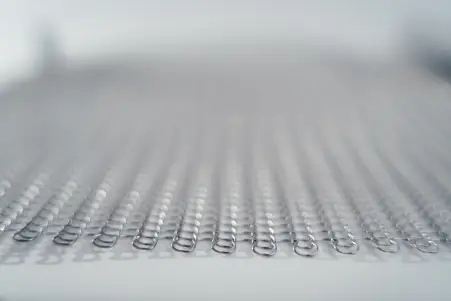
Knitted wire mesh works on a similar principle. Fine metal wires are processed into a three-dimensional geometry on special circular knitting machines. This creates countless interconnected wire loops that together form an architecture – stable, flexible, and permeable.
By choosing the wire diameter, mesh size, and knitting technique, this structure can be precisely tuned to the respective task. At eloona, the range extends from 40 µm fine fibres to 0.7 mm wire diameter – processed on knitting widths between 10 and 1,200 mm.
Properties
of knitted wire mesh.
The properties of knitted wire mesh result from the interaction of material, mesh characteristics, and processing. Depending on the design, individual material properties can be specifically reinforced or combined.
- large specific surface area
- high mechanical stability
- high temperature resistance
- high porosity
- corrosion resistance
- good cleanability and reusability
- good formability
This creates a material that adapts exactly to its task – not the other way around.
Individual knitted wire meshes for every application.
No two applications are the same.
That is exactly why we do not develop knitted wire meshes from a catalog, but according to requirements – via five key parameters that we adjust specifically for your application:
- material
- mesh size
- wire diameter
- knitting technique
- processing
This results in a structure with a targeted effect – whether high separation efficiency, defined flow, or controlled absorption capacity.
Manufacturing possibilities for knitted wire mesh.
Our own production in Pleinfeld allows for an exceptionally wide range of knitted wire mesh variants – from fine filter mesh to thick-wire structural mesh.
- knitting widths from 10 to 1,200 mm
- wire diameters from 40 µm to 0.7 mm
- single or multi-strand processing
- crimped or non-crimped structures
- continuous production on circular knitting machines
Materials for knitted wire mesh.
Depending on the area of application, we process over 40 different materials:
- stainless steels
- aluminium
- galvanised or bright steel
- plastics
- fibre yarns such as Kevlar®
- special materials such as Inconel®, Monel®, Hastelloy®, Duplex, or titanium
- precious metals
Some of these materials enable applications under extreme conditions – at high temperatures, in aggressive media, or under continuous mechanical stress.
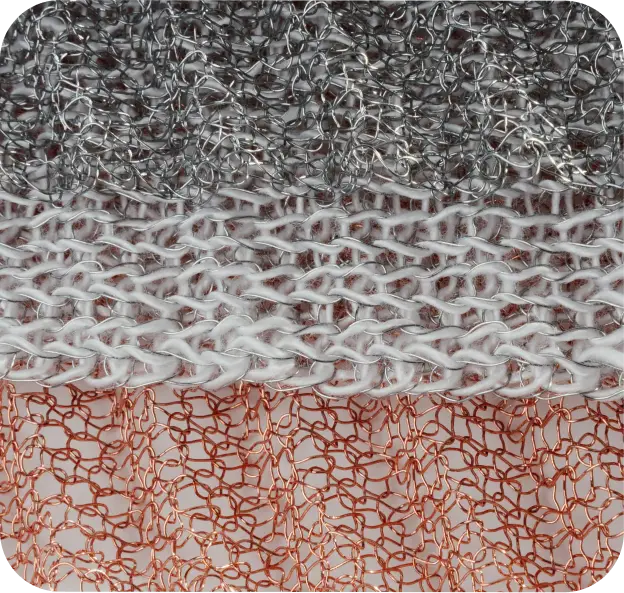
Knitting techniques and structures.
Different knitting techniques create knitted wire meshes, each with its own property profile:
- various mesh patterns
- knitted sleeve
- knitted cords (hollow or solid cords, e.g., as seals or over-knitting)
- individual custom shapes
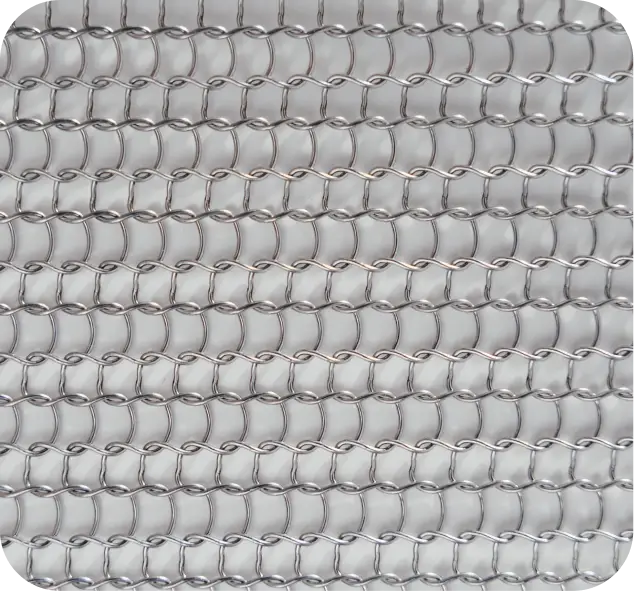
Special solutions for your application.
We offer additional solutions for special applications:
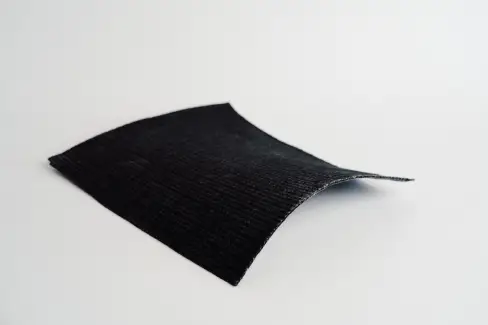
- shred-free mesh
- cleaned stainless steel and aluminium mesh
- material combinations
- special mesh patterns
Typical applications of knitted wire mesh.
The structure of knitted wire mesh allows for use in very different industries and functions – wherever material must simultaneously separate, protect, or damp.
Functional applications:
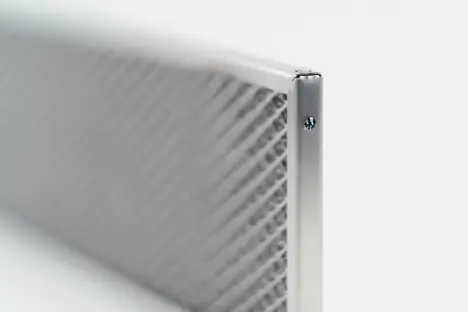
- separation cassettes and demisters
- industrial filtration
- vibration and sound damping
- thermal and acoustic insulation
- explosion protection
- cut protection
- electromagnetic shielding
Used in sectors such as:
- process and plant engineering
- petrochemical industry
- medical technology
- burner technology
- architecture and facade construction

Knitted wire mesh
Made in Germany
We manufacture our knitted wire meshes entirely in Pleinfeld and predominantly use input materials from the EU.
The processing of high-quality wires ensures durable, dimensionally stable products. Short transport routes, efficient manufacturing, and minimal scrap rates also contribute to resource-saving production.
development and innovation.
We continuously develop our machines and production processes. Especially in thick-wire processing, our technologies enable reliable, process-stable manufacturing – even where standard processes reach their limits.
Data sheets for knitted wire mesh.
For technical evaluation and planning, we provide the most important documents regarding our knitted wire meshes in a clear format. This allows you to quickly find the specifications you need for design and inquiries.
Frequently asked questions about knitted wire mesh.
What is knitted wire mesh?
Knitted wire mesh is a three-dimensional structure made of finely meshed metal wires, produced on circular knitting machines. Due to its large surface area and open, permeable structure, it is particularly suitable for filtration, separation, damping, and mechanical protection.
How does knitted wire mesh differ from woven wire?
Woven wire consists of wires woven at right angles with a fixed mesh size. Knitted wire mesh, on the other hand, is knitted from continuous loops – this makes it more elastic, more compressible, and gives it a significantly larger effective surface area per volume. For separation and damping, knitted mesh is therefore usually the functionally better choice.
What materials can knitted wire mesh be made of?
We process over 40 materials – from stainless steels, aluminium, and steel to plastics and fibre yarns, as well as special materials such as Inconel®, Monel®, Hastelloy®, titanium, or Kevlar®. The choice of material depends on the temperature, medium, and mechanical load of the respective application.
In what dimensions is knitted wire mesh available?
We manufacture knitting widths from 10 to 1,200 mm with wire diameters from 40 µm to 0.7 mm, single or multi-strand. In addition, special forms such as knitted sleeves, knitted cords, and customer-specific geometries are possible.
What is knitted wire mesh used for in industry?
Typical areas of application are separation cassettes and demisters, industrial filtration, vibration and sound damping, thermal insulation, explosion protection, and electromagnetic shielding. Knitted wire mesh is used, among other things, in plant engineering, the petrochemical industry, medical technology, and burner technology, as well as interior and exterior architecture.
Can knitted wire mesh be designed for a specific application?
Yes. Through material, mesh size, wire diameter, and knitting technique, properties such as flow, separation efficiency, stability, and absorption capacity can be specifically adjusted. Every knitted wire mesh we produce is designed according to the requirements of the specific application – not from a catalog.
Is knitted wire mesh temperature and corrosion resistant?
This depends on the chosen material. Stainless steels offer good corrosion resistance; special materials such as Inconel® or Hastelloy® are suitable for high temperatures and aggressive media. For extreme operating conditions, we tailor the material specifically to your application.
How do I receive a suitable offer for knitted wire mesh?
The best way is to describe your application to us – area of use, medium, temperature, and desired function. On this basis, we will jointly develop the appropriate mesh structure and provide you with a specific offer. A dedicated contact person will accompany you from the first inquiry to delivery.
Can different materials be combined in one mesh?
Yes. Material combinations are possible, for example, to combine mechanical stability and filter effect or to unite different functions in one component.
Is knitted wire mesh manufactured in Germany?
Yes. We manufacture entirely at our location in Pleinfeld and predominantly use input materials from the EU. Thus, we offer short delivery routes, constant quality, and Made in Germany.
Can we deliver cleaned knitted wire meshes?
Yes, cleaned knitted wire meshes are possible by arrangement. The cleaning is matched to the material, component shape, and area of use.
Your application. Our knitted wire mesh.
Whether filtration, separation, or special application – together we will develop the knitted wire mesh that fits your requirements. Describe your application to us; the rest will follow in conversation.